Lebanon at the Crossroads: Do We Have the Courage for Change

“Seeing the tears of a wounded child, the fear on the elderly’s face, or the panic of a young adult at the thought of having to go through all this absurdity all over again… Why does it affect me and not the cold-blooded murders that undertake these crimes? We’ve had enough of these targeted assassinations.

But I care more about the innocent citizens that pay the price, the anonymous civilians who will succumb to their wounds, flee the country or live quietly in sadness and despair hereafter. Today, I think about you and pray for you and hope to help you the best way I can. You are priceless. YOU are Lebanon.” Continue reading “Lebanon at the Crossroads: Do We Have the Courage for Change”

Egypt: Waiting for What’s Next

We all know that barely two years after a revolution is rather early to assess its success, but for some Egyptians, the prospects of the post-revolution era are not looking particularly bright already.

In a recent talk in Beirut by Mohammad al-Agaty, head of the Arab Alternative Forum for Studies and member of the Popular Socialist Alliance, and Reem Maged, an Egyptian journalist and ONTV host, both agreed that beyond the surface of a new era in the making, new alleged freedoms and the absence of former regime members, deep down, not a lot of changes have taken place in Egypt. Continue reading “Egypt: Waiting for What’s Next”

Never Angry Enough

I don’t know about you, but when I watched the scenes from Benghazi last Friday, as thousands of Libyans stormed the headquarters of Islamist group Ansar el-Sharia, leading to their eviction from the city, it felt quite overwhelming. The militia that some have accused of not only being behind the attack against the US Consulate, but of spreading terror and fear among the local population, had gotten the people’s verdict of its presence first hand. The government of Libya and its interim leader soon followed with their call to disband all illegal militias in the country, which spread during and after Qaddafi’s ousting. But on Friday, the people of Benghazi had had enough, they spoke and they were heard. Of course, disbanding all militias and transforming Libya into a full-fledged stable democracy will take time, but at least that seems what the people truly want to achieve, no matter how long it takes. Continue reading “Never Angry Enough”

Failure of the Arab Revolution?

Nobody with the smallest amount of common sense should disagree that the reactions to the “Innocence of Islam” movie were simply senseless. Of course, it could have remained violent and lawless, had it not been for the sad unfolding of events in Benghazi, which led reactions into the realm of the criminal. Much has already been written and said in this regard. But what got me thinking are some commentators’ views and articles in the Western press suggesting that the violence witnessed in the past days signals some sort of failure of the Arab Spring or Arab Revolutions, if only because the most severe violence is taking place in post-revolution countries. Continue reading “Failure of the Arab Revolution?”

Minister of the People

There is nothing like waking up on a Sunday morning to an episode of one of many inspiring and animated Lebanese political talk shows. Well, not really.  Political talk shows are only a mirror of the dismal centuries-long political vicious circle we have been stuck in, anything but inspiring and animated in a tragicomedy kind of way.  But when I tuned to New TV’s Sunday talk show yesterday, there he was with his salt and pepper mustache that Lebanese men of old days would swear on; characteristically irritated and annoyed; decorating his speech with the vernacular that you’d never think would make it on national television. Listening to Charbel Nahas at any time of day is refreshing and animated, and so I watched on. Continue reading “Minister of the People”

Farewell to Fouad Al Turk

Today, Fouad Al Turk bids us farewell, yet we refuse to reciprocate. Today, Fouad Al Turk stands still and silent, on the hills overlooking his beloved hometown of Zahle, yet unrecognizable from his usual dynamic and eloquent self. Today, Fouad Al Turk refuses to admit that he is among the few who embodied the very essence of diplomacy and the best of Lebanese diplomacy, yet we know all too well that his is a breed that is slowly fading away… Continue reading “Farewell to Fouad Al Turk”
Prisoners to Oblivion I

To talk about them is to keep them alive.

While they live in each of their mothers’ bitter tears and in every beat of their fathers’ weary hearts, we must utter their names to keep them alive.

While they live through their pictures, hugged and kissed by those they left behind, we must tell their stories to keep them alive.

And while they live in freedom and dignity in our memories, those they barely had time to build before they left, we must remember them as our own children, brothers, sisters, husbands and friends, just to keep them alive. Continue reading “Prisoners to Oblivion I”

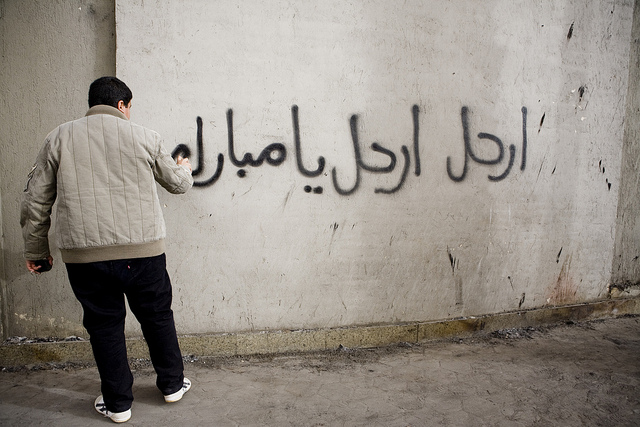
Words of Defiance: The Courage to Say Them, The Challenge to See them Through

If acts of defiance are what spark a revolution, then words of defiance are the fuel that keep it going.

“Irhal Irhal Moubarak”

For it was the words of the Arab Revolutions, expressions long-buried under the heaviness of oppression and the cloak of fear, that triggered the unthinkable. These words of defiance that have made heroes of the unknown, armed with nothing but hope and newly-found courage. And so they chanted: Continue reading “Words of Defiance: The Courage to Say Them, The Challenge to See them Through”